







Japanese Tanto: T10 Clay Temper Ko-Hi Bo-Hi Double Fuller with Deep Red Lacquer Plum Blossom Saya
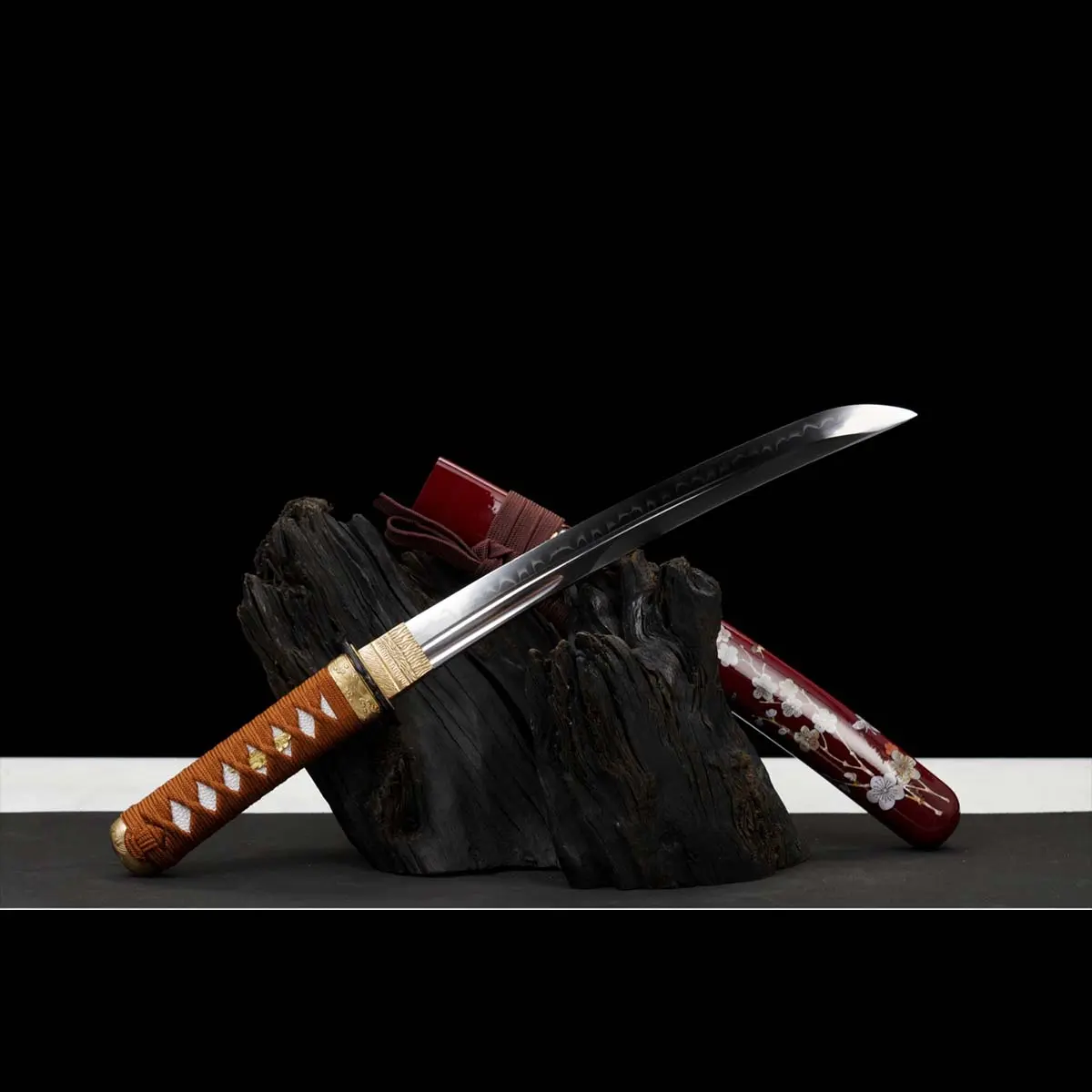
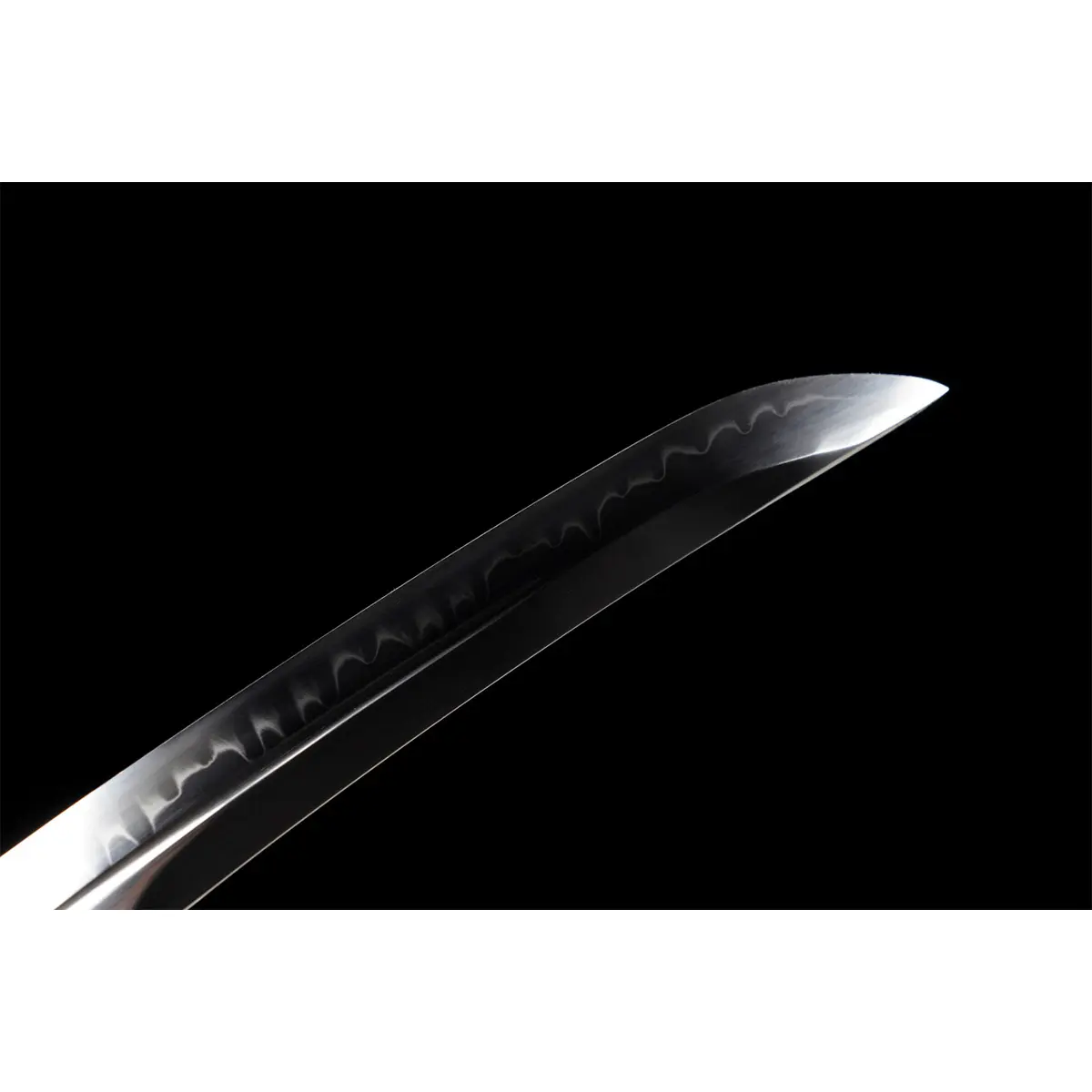
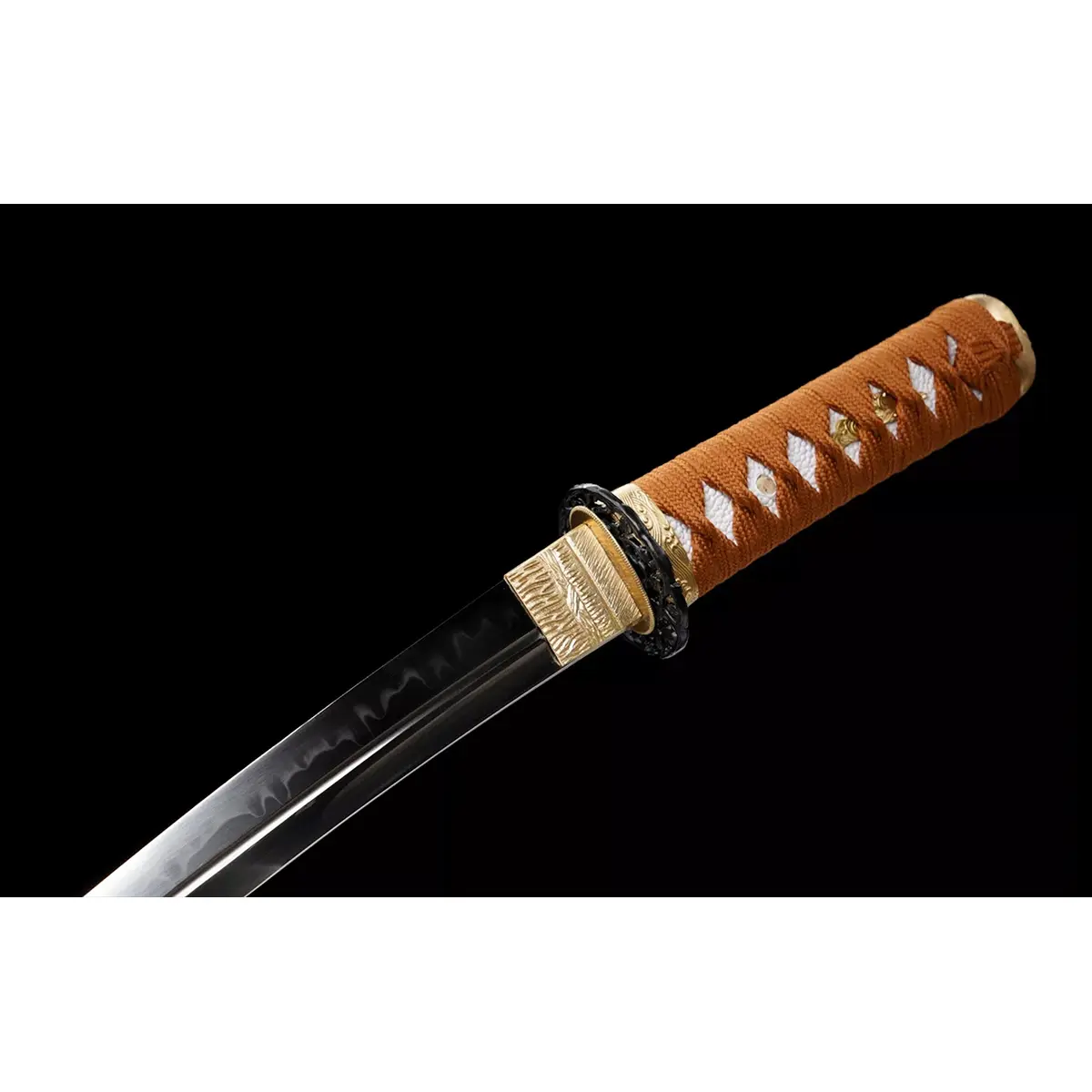
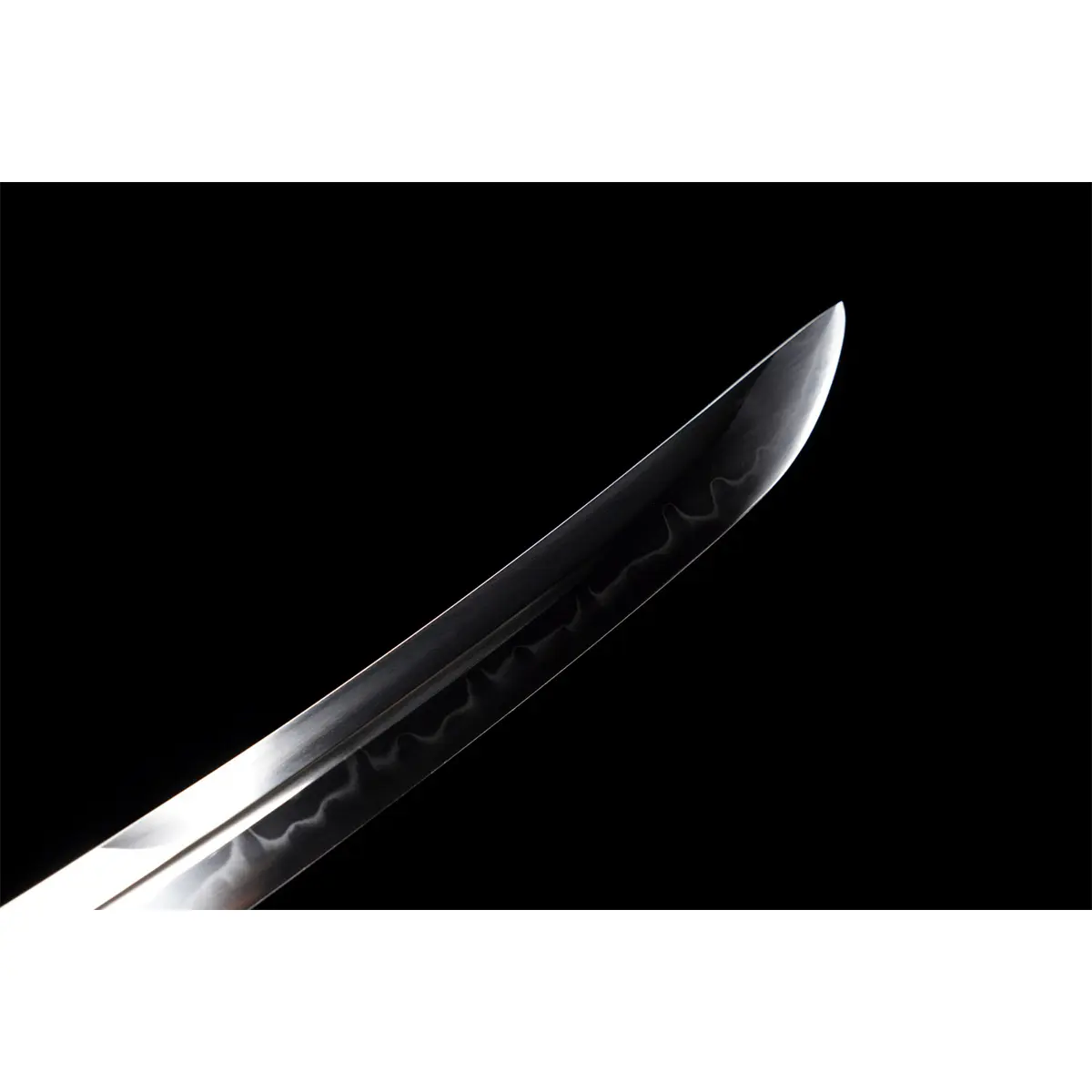
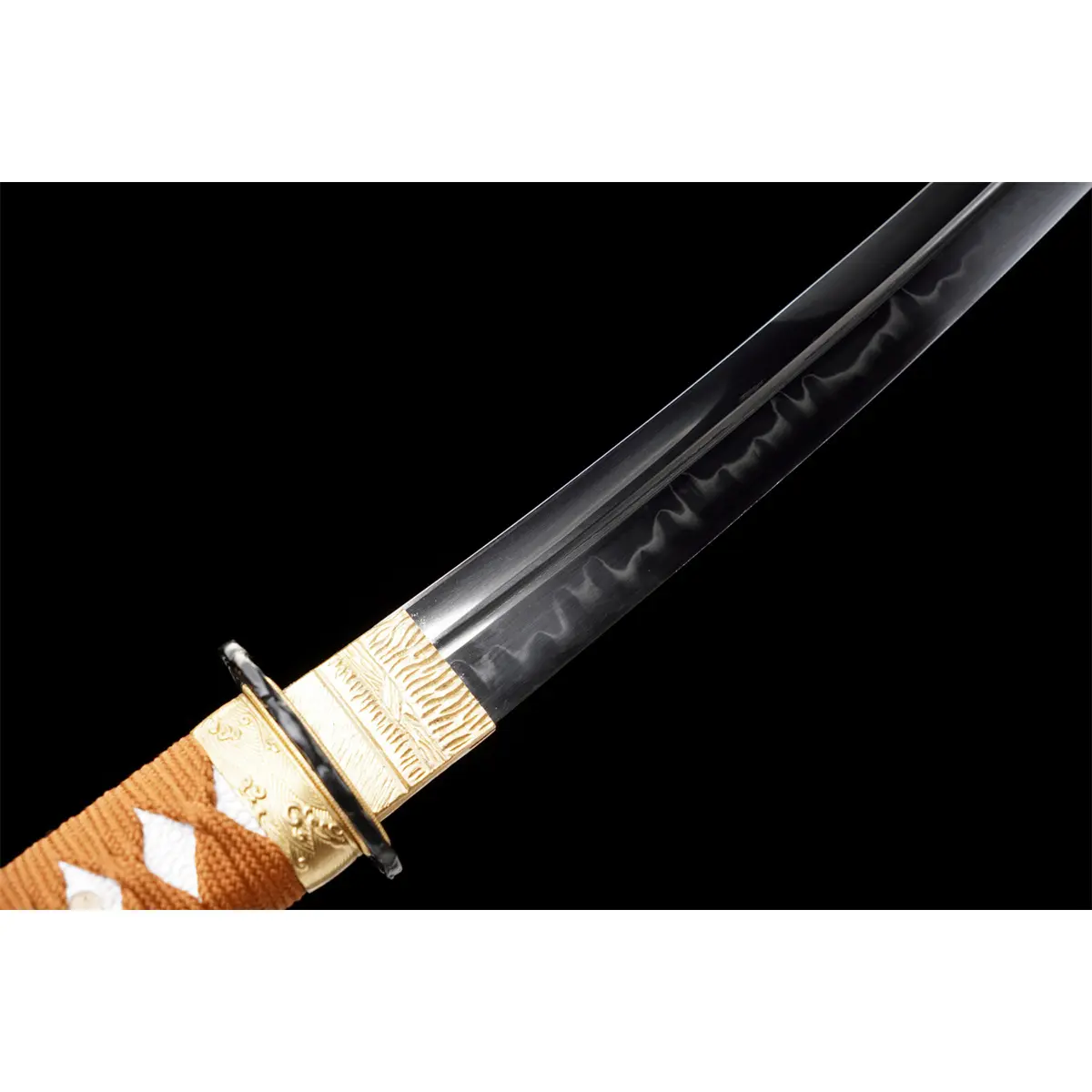
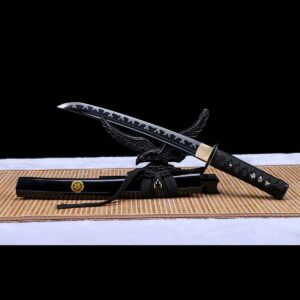
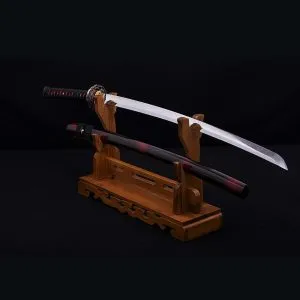
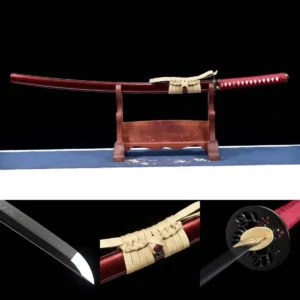
this is a hand-forged T10 tanto with two standout features: a traditional clay temper hamon and a rare ko-hi bo-hi double fuller design. the main fuller and a fine secondary groove run parallel along the blade -- a combination seldom seen on tanto. the blade is 17-step hand-polished, with a bright silver edge contrasting sharply against the dark body. the entire sword is assembled with premium fittings: a deep red lacquer saya hand-painted with white plum blossoms, a black ko-maru openwork tsuba, a gold bamboo-engraved habaki, real samegawa under orange-brown silk ito, and a dark red braided sageo with an amber bead. full tang. 55 cm overall. it is a tanto built for tanto practice, iaido, and high-end collection.
the saya alone makes this sword remarkable. each one is hand-painted -- branches, blossoms, butterflies -- applied directly onto the deep red lacquer base. no two are identical. it is a functional scabbard and a one-of-a-kind art object. the full set of fittings follows the ko-maru plum blossom aesthetic, tying the guard, habaki, menuki, and kashira into a unified design. this is a tanto for practitioners and collectors who want a blade with genuine artisan character.
core highlights
- T10 tool steel, clay tempered, ko-hi bo-hi double fuller
- clear natural hamon, 17-step hand polish, silver-on-black contrast
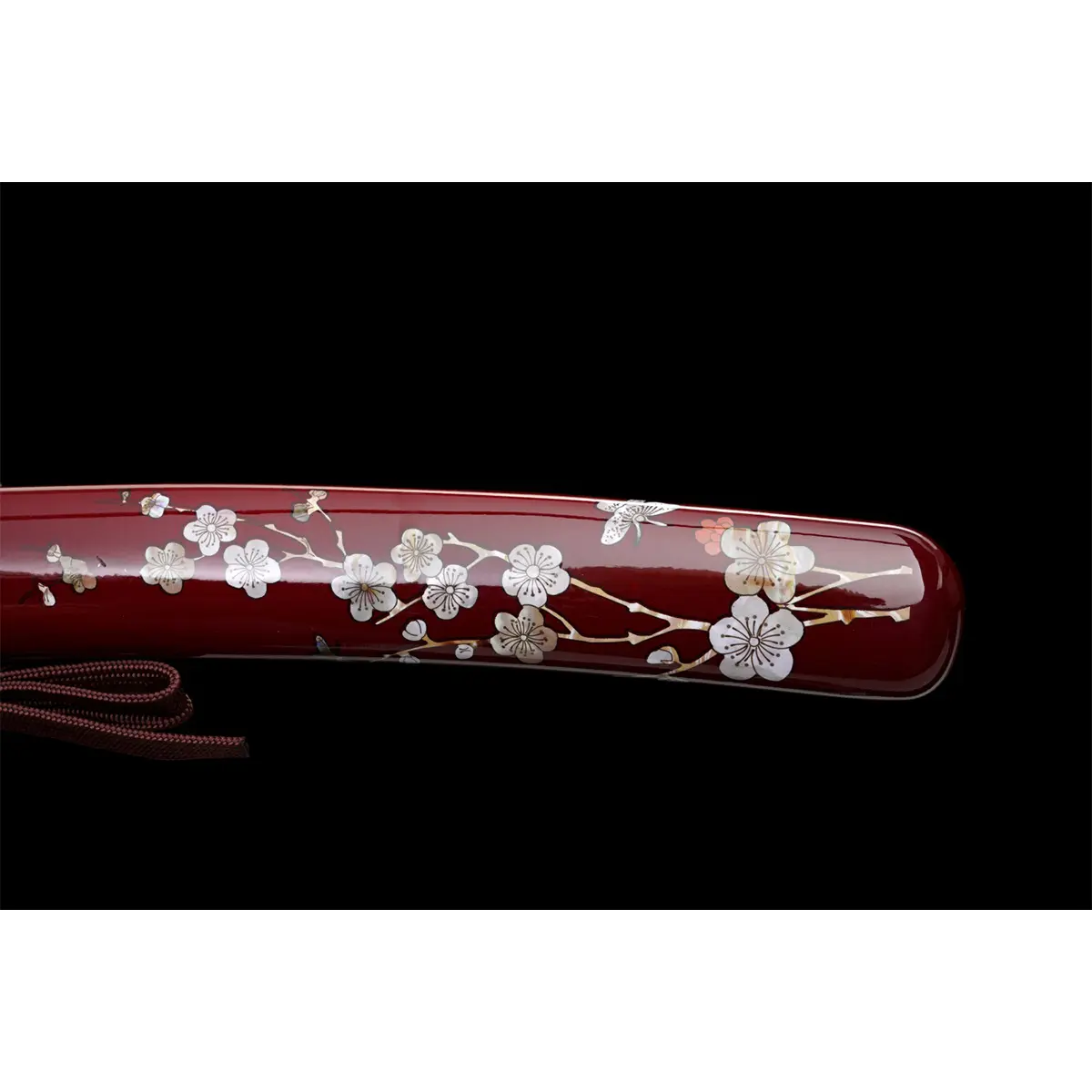
- deep red lacquer saya with hand-painted white plum blossoms -- each one unique
- black ko-maru openwork tsuba, gold bamboo habaki, ko-maru kashira
- real samegawa, orange-brown silk diamond wrap, gold menuki
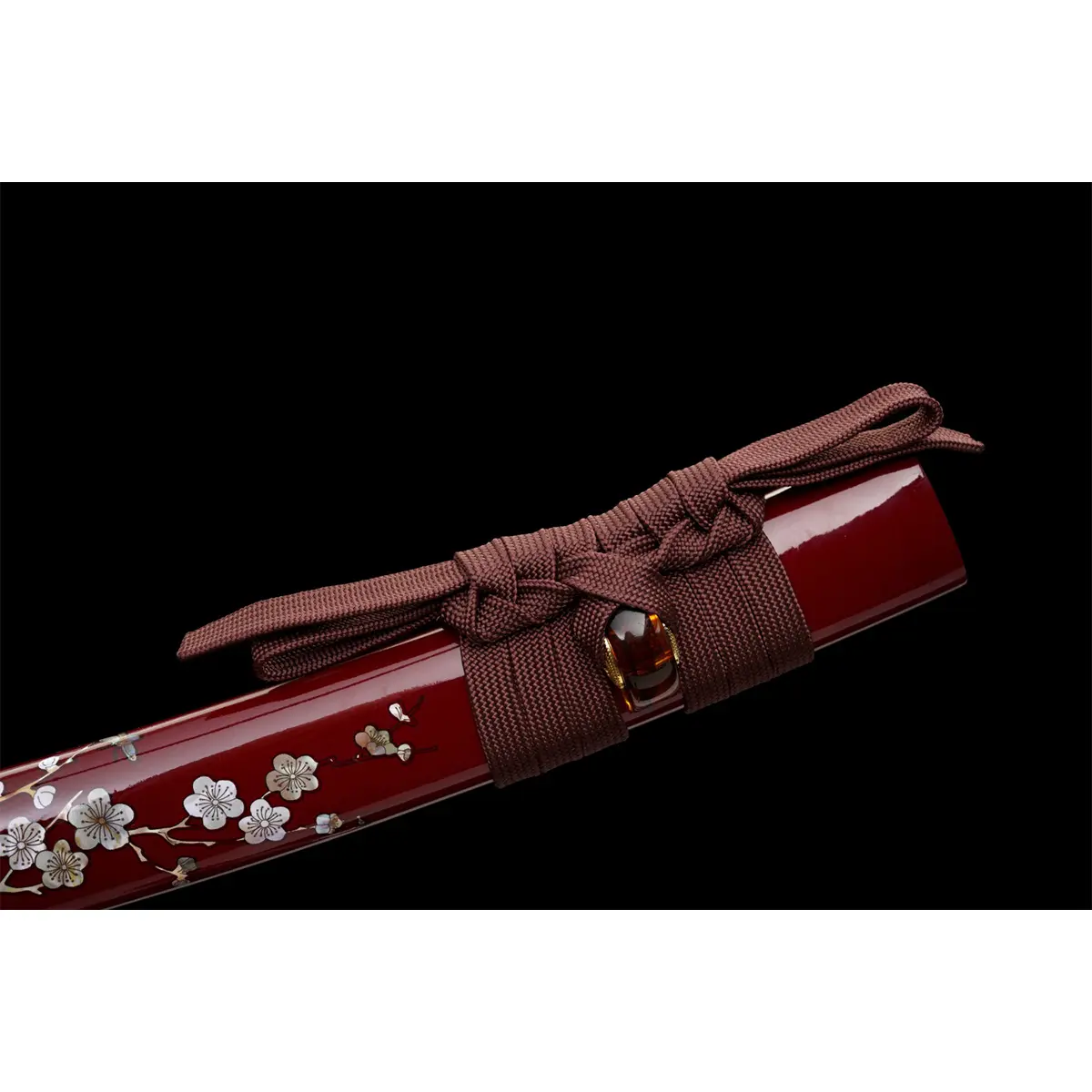
- dark red braided sageo with amber bead
- full tang, 55 cm, 0.68 kg -- portable, well-balanced
blade: T10 steel, clay temper, ko-hi bo-hi
T10 high-carbon tool steel, about 1.0 percent carbon with tungsten. it is harder than 1060 or 1095, holds an edge well, and takes clay tempering to its fullest potential. the blade is hand-forged, then differentially hardened using the Japanese clay method. clay is applied to the spine before quenching -- the edge cools fast and hardens, the spine cools slow and stays tough. the result is a visible, wavy hamon line running along the edge. on this blade, the hamon is clear and natural, not etched or simulated.
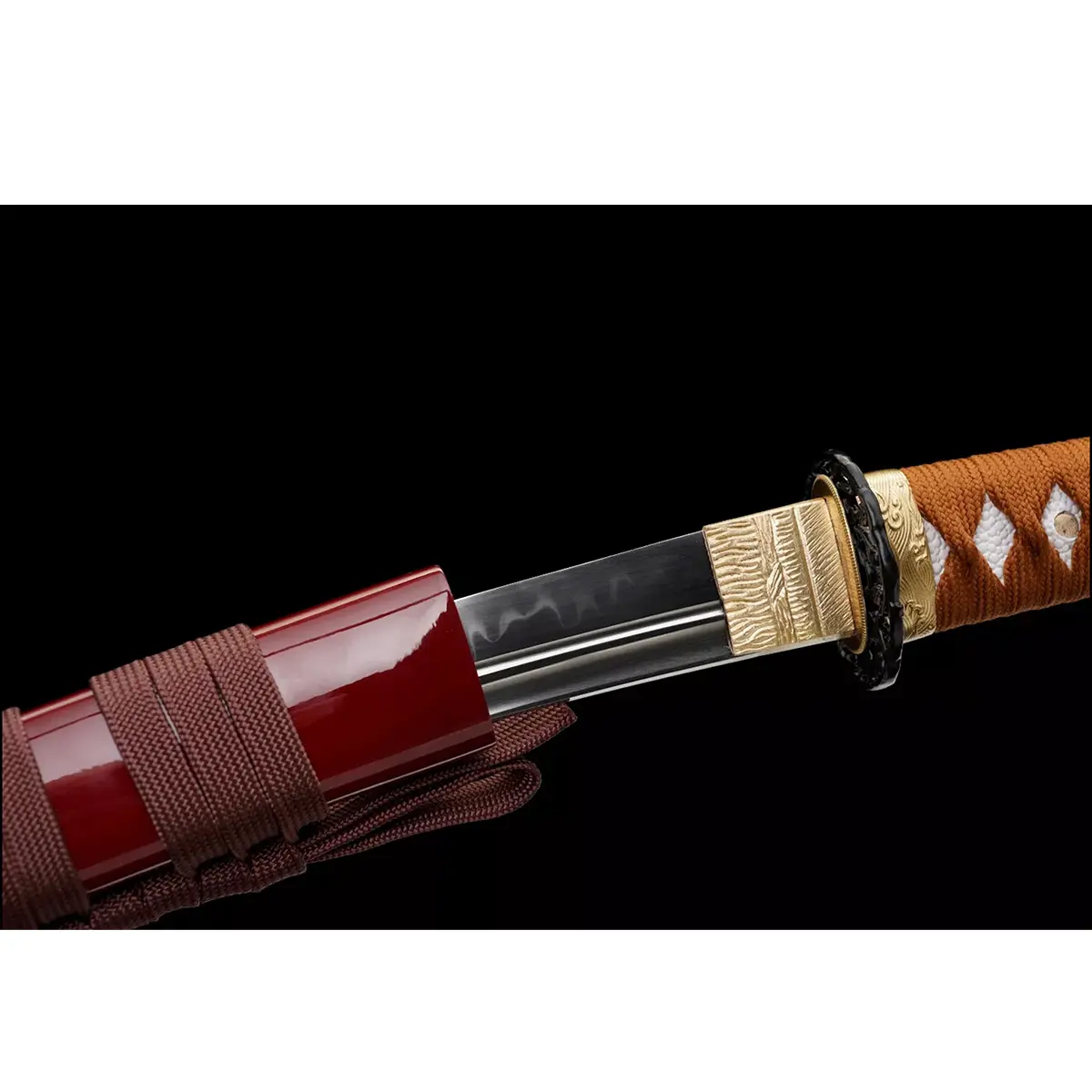
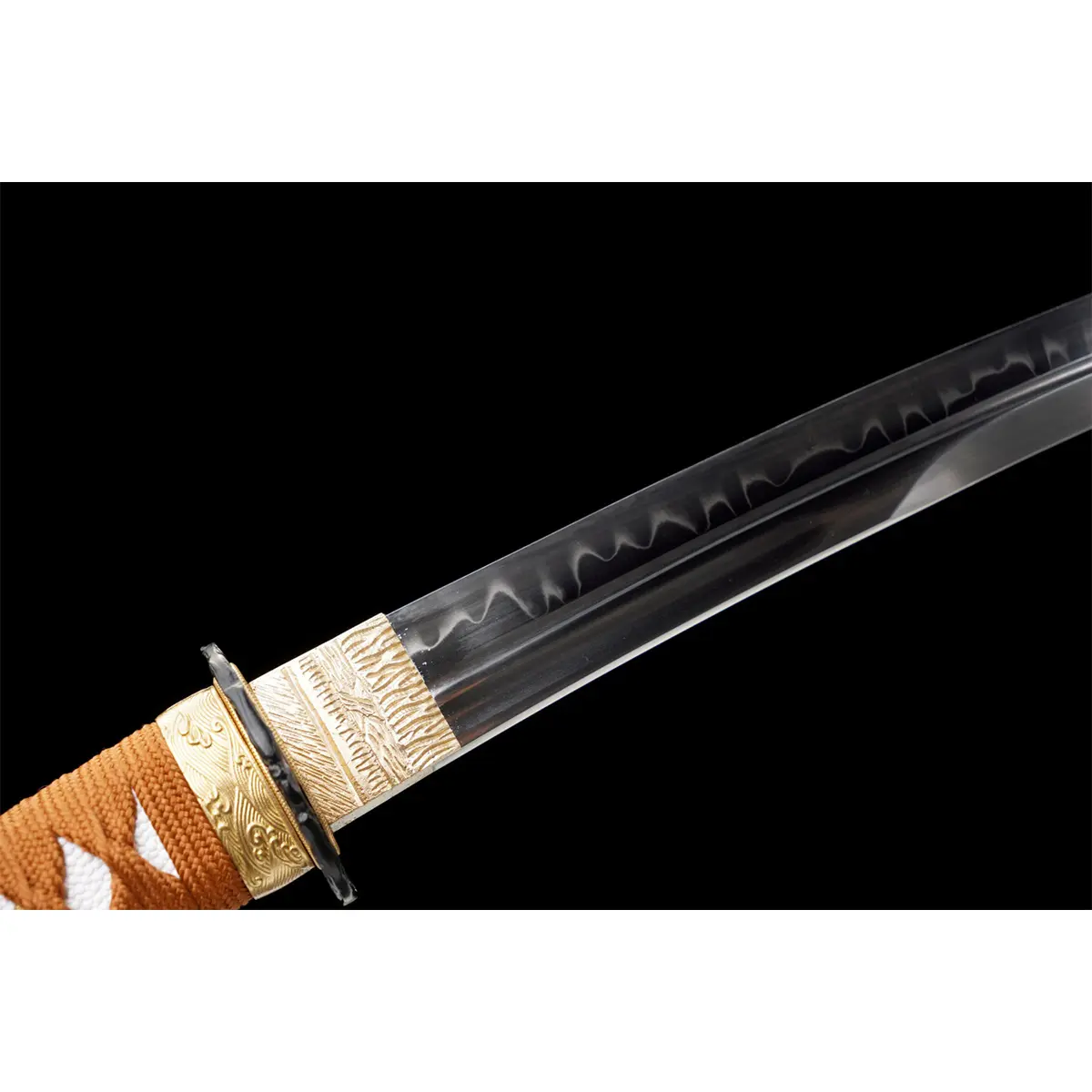
the ko-hi bo-hi double fuller is the blade's most distinctive feature. a main fuller (bo-hi) runs the full length of the blade. alongside it, a finer secondary groove (ko-hi) runs parallel. dual-groove tanto are uncommon. the two grooves reduce weight and shift the balance point, making the blade feel quicker in hand and producing a sharper swish sound when swung. the 17-step hand polish brings the edge to a bright silver finish while leaving the body dark, creating the striking contrast that defines the blade's appearance.
saya: deep red lacquer with hand-painted plum blossoms
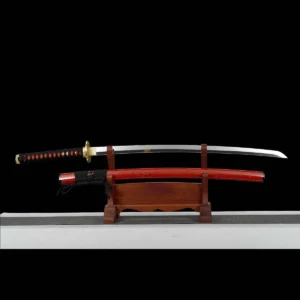
the saya is the artistic centerpiece of this tanto. solid wood body, finished with a deep red high-gloss lacquer -- rich, even, luminous. over the dried lacquer, white plum blossom branches are hand-painted: branches curve naturally, blossoms open in fanned petals, small details -- butterflies, birds -- are placed by brush. every saya is different. the contrast between the deep red base and the white blossoms is bold and traditional, referencing Japanese seasonal imagery. the high-gloss surface reflects light, making the red-and-white pattern feel like a painted scroll. this is not a printed design -- it is brushwork applied by hand.
tsuba: black openwork ko-maru, plum blossom style
the tsuba follows the ko-maru (small round) form -- a classic guard shape. it is black metal with an openwork scroll and vine pattern. light passes through the cutouts, making the design feel lighter than solid metal. the edges are smooth and well-finished. the ko-maru form and the plum blossom reference extend to the kashira, unifying the guard and the butt cap. the black tsuba contrasts with the gold habaki, creating a black-and-gold palette that anchors the overall design.
habaki: gold with bamboo and feather engraving
the habaki is a gold collar that fits over the blade at the tsuba junction. it is engraved with a bamboo and feather motif -- fine lines raised from the gold surface. the engraving is precise and detailed. the gold habaki bridges the dark tsuba and the blade, adding warmth and luxury to the fittings. it is fixed in place and does not move during use.
tsuka: real samegawa, orange-brown silk, gold menuki
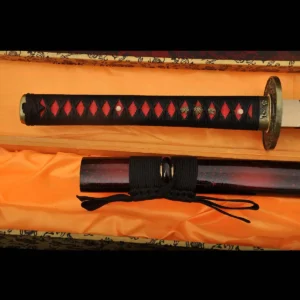
the tsuka core is hard wood. the base layer is genuine white shark skin (samegawa) -- not synthetic. the granular texture of real samegawa provides grip under the wrap and adds a layer of cushioning. through the diamond openings of the silk ito, the white samegawa is visible, creating a warm contrast against the orange-brown silk. the ito is wrapped in a tight diamond pattern (hineri-maki), the cord twisted before each pass for a clean, secure grip. gold menuki sit under the wrap on each side. the kashira is ko-maru style, ivory-tone, matching the tsuba form. the handle is secured with double bamboo mekugi pins. full tang -- the blade extends the full length of the handle.
sageo: dark red braided cord with amber bead
the sageo is a dark red braided cord, woven tightly for durability. at the knot, a small amber gemstone bead is set in a gold frame. the amber glows warmly and picks up the gold of the habaki and menuki. the dark red sageo echoes the deep red saya lacquer -- darker and more subdued, but related in tone. the sageo is both decorative and functional, used to tie the saya to the obi when the sword is worn.
key features
T10 steel, clay temper, ko-hi bo-hi
- T10 high-carbon tool steel, hand-forged
- clay tempering, clear natural hamon
- ko-hi + bo-hi double fuller (rare on tanto)
- 17-step hand polish, silver-on-black contrast
- sharpened edge, high hardness, strong edge retention
deep red lacquer saya with hand-painted plum
- solid wood body, deep red high-gloss lacquer
- white plum blossoms hand-painted by brush
- branches, blossoms, butterflies -- each saya unique
- high-gloss surface, vivid red-and-white contrast
- functional scabbard and one-of-a-kind art piece
black ko-maru openwork tsuba
- ko-maru (small round) form, black metal
- openwork scroll and vine pattern
- plum blossom reference style
- contrasts with gold habaki, black-and-gold palette
- well-finished edges, smooth to the touch
gold bamboo habaki
- gold engraved habaki collar
- bamboo and feather motifs, precise engraving
- bridges tsuba and blade, warm gold accent
- fixed, does not shift during use
real samegawa, orange-brown silk wrap
- genuine white shark skin (samegawa), not synthetic
- orange-brown silk ito, tight hineri-maki wrap
- white samegawa visible through diamond openings
- gold menuki, ko-maru ivory-style kashira
- double bamboo mekugi, full tang
dark red sageo with amber bead
- dark red braided cord, tightly woven
- amber gemstone bead in gold frame
- warm accent, echoes deep red saya
- functional and decorative
- secures saya to obi when worn
specifications
| overall length | 55 cm (21.7 inches) |
|---|---|
| blade length | 33 cm (13.0 inches) |
| handle length (tsuka) | 17 cm (6.7 inches) |
| blade width | 3.2 cm (1.26 inches) |
| blade thickness | 0.6 cm (0.24 inches) |
| weight | approximately 0.68 kg (1.5 lbs) |
| blade material | T10 high-carbon tool steel, hand-forged |
| blade treatment | clay tempering, ko-hi bo-hi double fuller, clear natural hamon, 17-step hand polish, silver edge on dark body |
| construction | full tang, double bamboo mekugi, fully disassemblable |
| tsuba | black openwork ko-maru (small round), plum blossom scroll style |
| habaki | gold, bamboo and feather engraved pattern |
| tsuka core | hard wood |
| samegawa | genuine white shark skin (real samegawa) |
| tsuka wrap | orange-brown silk ito, tight hineri-maki diamond wrap |
| menuki | gold, two pieces |
| kashira | ko-maru ivory-style, matching form |
| saya | solid wood, deep red high-gloss lacquer, hand-painted white plum blossom branches, butterflies, each saya unique |
| sageo | dark red braided cord, amber gemstone bead with gold frame |
| brand | Ab Sword |
why buy from ab sword
- T10 tool steel with clay tempering -- premium blade material and traditional heat treatment
- ko-hi bo-hi double fuller -- rare dual-groove design on a tanto
- clear natural hamon, 17-step hand polish -- sharp edge, vivid silver-on-black contrast
- hand-painted plum blossom saya -- each one unique, a one-of-a-kind art piece
- deep red lacquer saya with high-gloss finish -- vivid, traditional Japanese aesthetic
- black ko-maru openwork tsuba and gold bamboo habaki -- unified traditional fittings
- genuine samegawa and orange-brown silk wrap -- premium materials, warm palette
- dark red braided sageo with amber bead -- refined detail, warm accent
- full tang, double mekugi -- safe, functional, disassemblable for maintenance
- free sword bag and certificate of authenticity included
- we stand behind our craftsmanship
frequently asked questions
ko-hi bo-hi is a double-groove design: a main fuller (bo-hi) and a secondary finer groove (ko-hi) run parallel along the blade. this combination is rare in tanto blades. the dual grooves reduce blade weight and shift the balance point, making the blade feel faster and livelier in the hand. they also produce a distinctive audible swish when swung. functionally, the ko-hi bo-hi improves cutting speed. aesthetically, the two parallel lines add visual depth to the blade surface.
clay tempering (tsuchi-awase) is a traditional japanese heat treatment. clay is applied to the spine before quenching. the spine cools slowly and stays tough; the edge cools fast and hardens. the result is a visible hamon line -- the boundary between the hard edge and softer spine. this differential hardening gives the blade both sharpness and resilience. the hamon on this tanto is clear, natural, and wavy, visible along the edge after polishing.
T10 is a high-carbon tool steel with about 1.0 percent carbon and added tungsten. the tungsten raises its hardness and edge retention significantly. T10 is harder than 1060 or 1095 carbon steel. it holds an edge well and withstands impact. clay tempering T10 produces a strong, vivid hamon. it is a premium choice for a tanto meant for tanto practice, test cutting, and display.
the saya is the standout feature. it is solid wood with a deep red high-gloss lacquer finish. on top of that, white plum blossom branches are hand-painted directly onto the surface: branches, blossoms, petals, and small butterfly or bird details. no two saya are identical -- each brushstroke is placed by hand. the deep red base contrasted with white plum blossoms references the Japanese art tradition of seasonal imagery. the saya is both a functional scabbard and a one-of-a-kind art piece.
samegawa is genuine shark skin (ray skin). it has a natural granular texture that grips the hand under the ito wrap and provides a layer of padding between the wood core and the cord. real samegawa has natural variation in grain pattern -- each piece is unique. it is not synthetic. on this tanto, the white samegawa is visible through the diamond openings of the silk ito wrap, creating a warm white-and-orange contrast against the orange-brown silk.
ko-maru (小烏丸) is a traditional tsuba form -- a small round guard. the ko-maru tsuba on this tanto has an openwork scroll and vine pattern in black metal, referencing the classic ko-maru plum blossom style. the tsuba and the kashira (butt cap) both follow the ko-maru form, creating a unified guard-and-cap aesthetic that ties the fittings together.
yes, this is a functional tanto. T10 steel, clay tempered, full tang, hand-sharpened. it is designed for tanto practice, iaido-style draws, and light test cutting. the ko-hi bo-hi double fuller improves cutting speed. always check local laws before using any sword for cutting. do not use on extremely hard targets. proper technique and target selection will preserve the edge.
the sageo is a dark red braided cord, tightly woven for durability. at the knot, a small amber gemstone bead is set in a gold frame, adding a warm accent. the dark red sageo echoes the deep red saya lacquer, and the amber bead picks up the gold of the habaki and menuki. it is both decorative and functional -- used to secure the saya to the obi (belt) when carried.
the habaki is a gold collar that fits over the blade at the tsuba junction. on this tanto, it is gold with engraved bamboo and feather motifs. the gold habaki forms a visual bridge between the dark openwork tsuba and the blade surface. bamboo is a symbol of resilience in Japanese culture. the engraving is precise and raised, giving the habaki a crafted, premium quality.
the saya has a lacquer base with hand-painted plum blossoms. treat it with care: avoid impacts, moisture, and prolonged direct sunlight. wipe with a dry soft cloth. do not submerge or use solvents. the paint is applied over cured lacquer and is durable, but the saya is a decorative object first. for long-term display, keep it in a sword bag or display case.
ab sword -- where tradition meets artistry







Reviews
There are no reviews yet.