
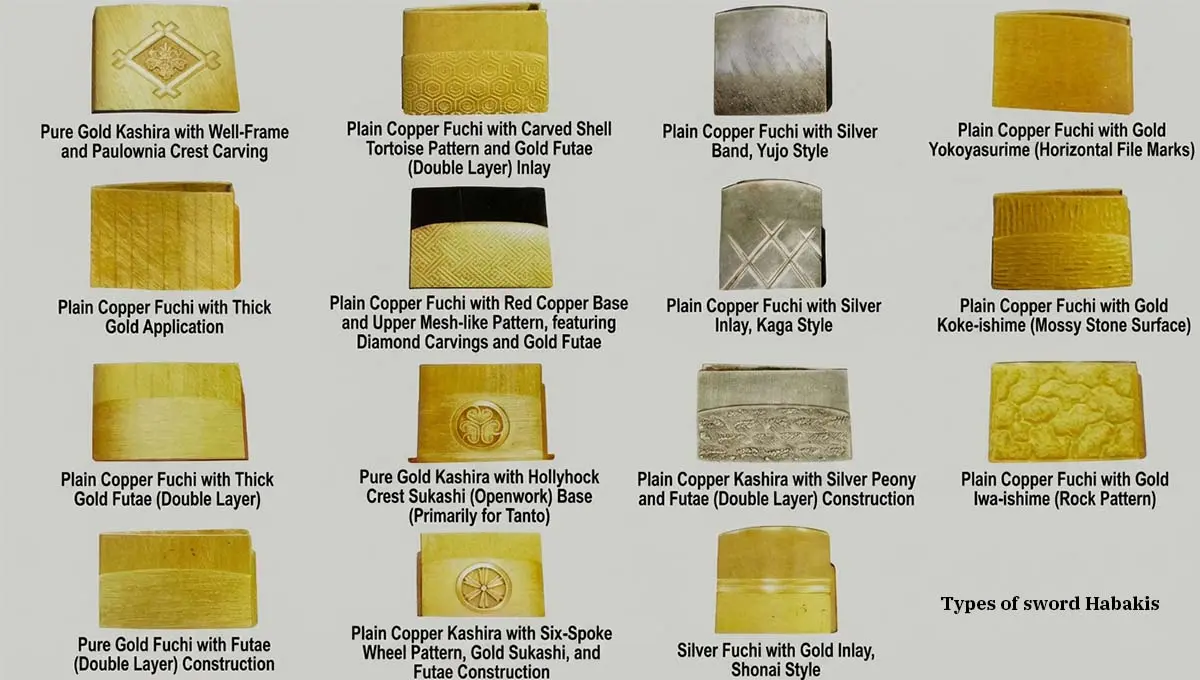
The Soul of the Secure Fit
In the world of Nihonto, the Habaki(刀鎺) is much more than a simple collar. It is the crucial junction between the blade and its scabbard (Saya).

- Function and DesignA Japanese sword is designed to sit loosely within its Saya to prevent the polished surface of the blade from scratching against the wood during drawing and sheathing. The blade primarily slides along its polished spine (Mune). However, this creates a challenge: without a secure anchor, the sword could easily slip out of the scabbard.The Habaki was engineered to solve this. Located at the base of the blade (Ha-machi and Mune-machi), it acts as a wedge that creates a precise, airtight seal with the mouth of the scabbard (Koiguchi). Historically, it is believed that the design of the Habaki may have evolved from the “Tunkou” (吞口) found on ancient Chinese swords.
- Material SelectionThe choice of material for a Habaki is a balance of strength and gentleness.
- Copper: The most common material due to its relative softness. This allows it to be custom-fitted to the unique geometry of the blade without risking scratches to the steel.
- Silver: Used for high-grade or “Tokubetsu” (special) blades, offering a refined aesthetic and superior durability.
- Gold Foil/Plating: Often applied to these metals to signify the prestige of the sword.
- Artistry and CraftsmanshipThough small, the Habaki is a canvas for the craftsman’s skill. Master smiths apply a vast array of file patterns—known as Yasurime—to the surface. This serves two purposes:
- Aesthetics: To enhance the visual harmony of the blade’s transition.
- Friction: To create a textured surface that increases grip within the Saya, ensuring the blade remains securely seated until the moment it is intentionally drawn.